Chinese Tallow & Camphor Tree Removal in Riverview, FL
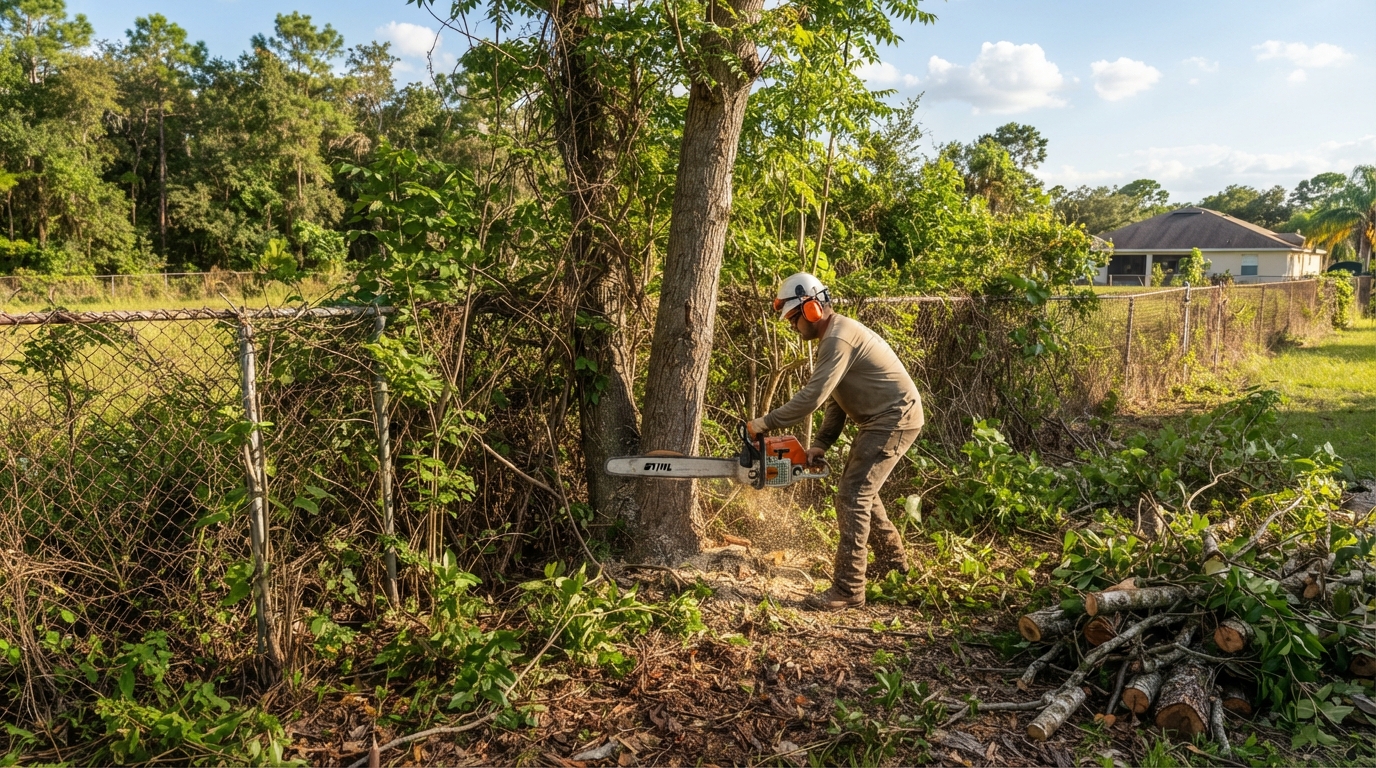
Chinese tallow and camphor trees are invasive species that spread readily on Florida properties. They often appear as unwanted volunteer growth along fence lines, property edges, and in vacant lots. Down South Removal Tree & Land Clearing Riverview removes tallow and camphor trees from residential, commercial, and vacant properties — clearing individual trees or groups of trees to reopen land for use, landscaping, or construction.
Removal may include tree cutting, stump grinding, brush clearing, debris hauling, and forestry mulching depending on the scope. Because these species can regrow from stumps and seeds, we can discuss follow-up management considerations as part of the project.
Why Remove Them
Why Tallow & Camphor Trees May Be Removed
Property owners remove tallow and camphor trees for practical reasons — unwanted growth, fence-line interference, overgrown vacant land, and competition with desired vegetation.
Unwanted Volunteer Growth
Tallow and camphor trees often appear as volunteer growth, spreading into areas where they are not wanted.
Fence-Line Interference
Trees growing along property edges and fences create access problems and damage boundaries over time.
Overgrown Vacant Land
Vacant lots with invasive tree growth become difficult to use, maintain, or develop.
Space Conflicts
Invasive trees compete with desired trees and landscaping for space, light, and resources.
Chinese tallow and camphor trees are not necessarily removed from every property where they appear — a healthy, well-placed camphor tree may be a desirable landscape feature. But when these species spread as volunteer growth, encroach on fence lines, or overtake vacant lots, removal becomes a practical property decision. The growth pattern of invasive trees — fast reproduction, dense seeding, and aggressive spreading — is what creates the problem for property owners.
For Riverview property owners preparing to build, landscape, or sell, clearing unwanted tallow and camphor growth is often part of the site-preparation process. For owners maintaining acreage or pasture, the trees interfere with routine property management. And for owners of vacant investment property, invasive tree growth reduces visibility, access, and marketability. We clear the growth and reopen the property for its intended use. For related services, see our invasive species removal and tree removal pages.
Project Scope
Invasive Tree Removal for Riverview Properties
The scope depends on the number of trees, their location, and the property owner's goals — from a single tree near a home to a full lot-clearing project.
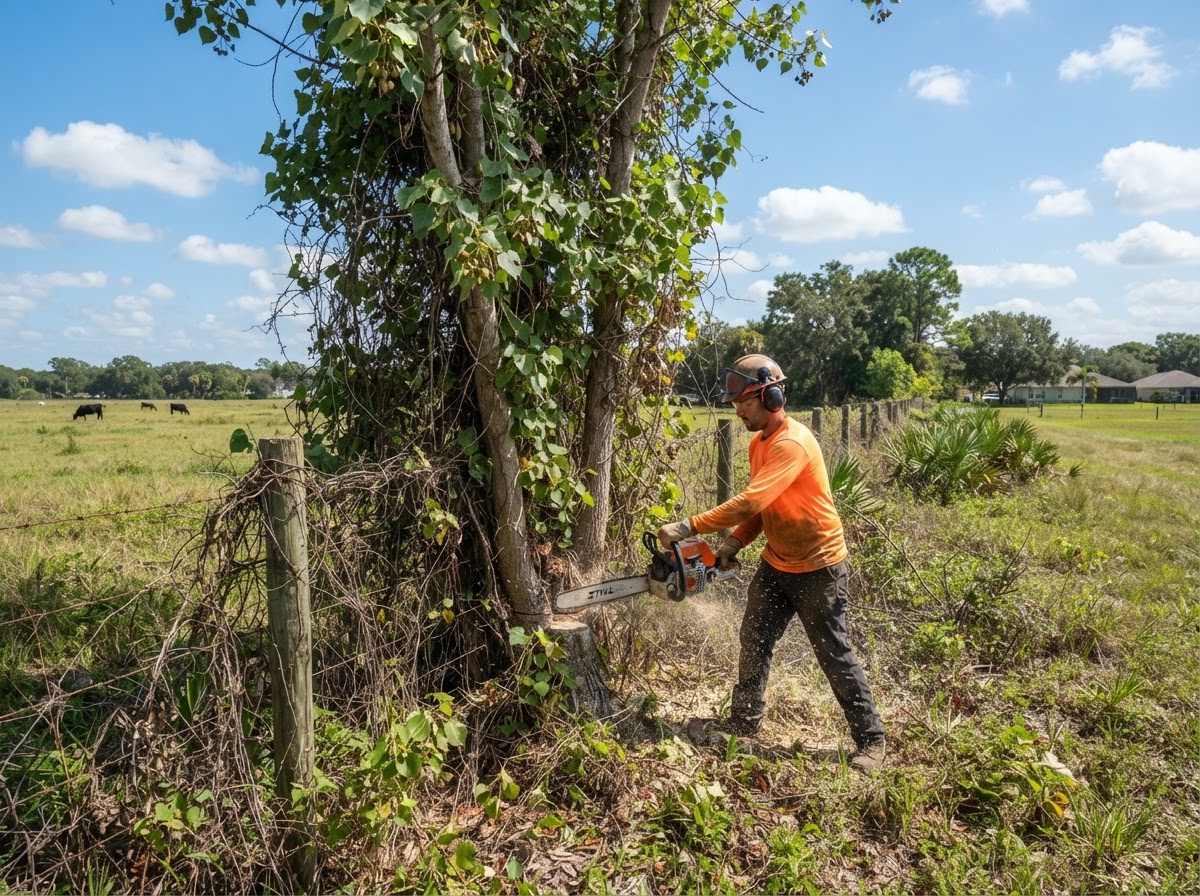
Tallow and camphor tree removal in Riverview ranges from single-tree projects to full-lot clearing. A single tree near a home may require sectional dismantling with rigging to protect the structure. A group of trees along a fence line may be cut and hauled as part of a boundary-clearing project. A vacant lot with dense invasive growth may require mechanical clearing, stump work, and debris hauling to prepare the site for development or sale.
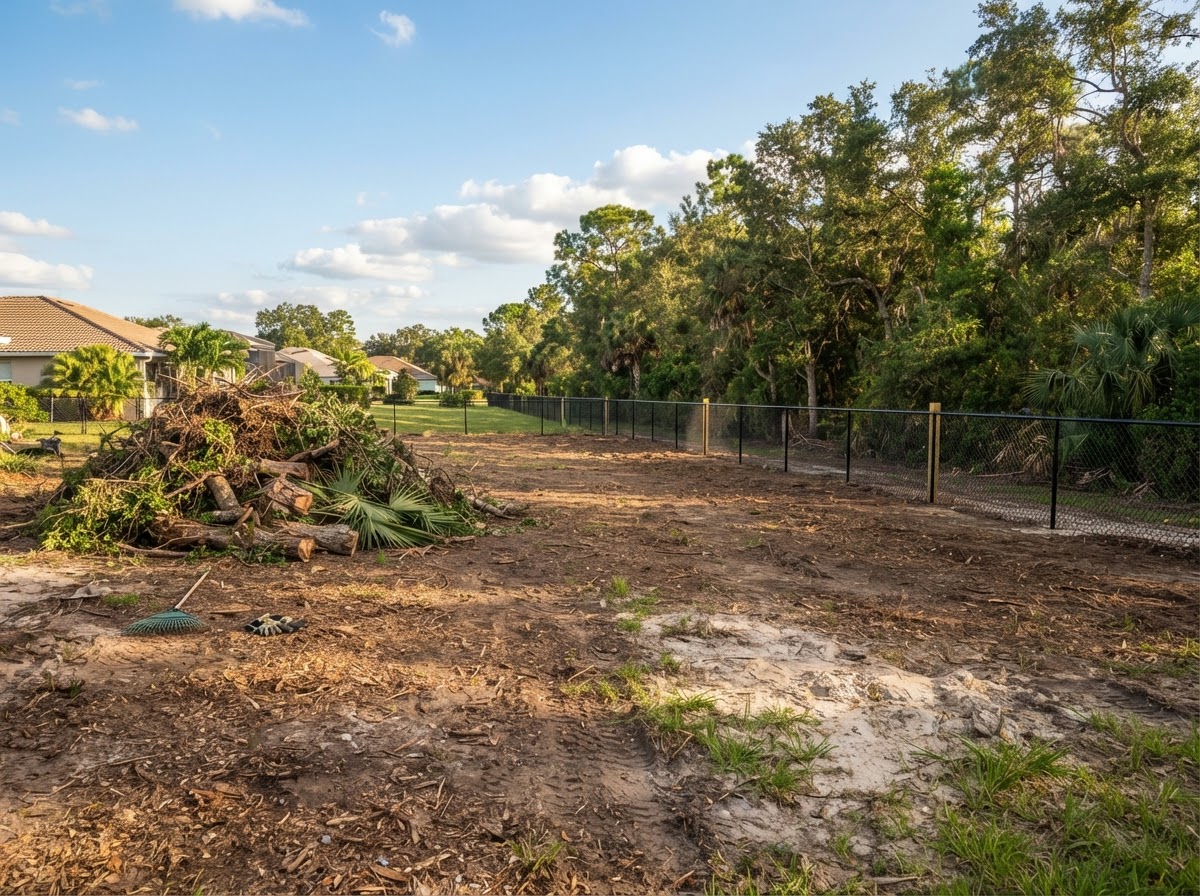
The project may combine several services: tree removal to take down the trees, stump grinding to address what is left in the ground, brush clearing to handle the undergrowth and smaller vegetation, forestry mulching to process vegetation mechanically where mulch can remain on site, debris hauling to remove the material, and land clearing to prepare the site for the next phase. The combination depends on the property and the intended finished condition.
Related: stump grinding, forestry mulching, brush clearing, and land & lot clearing.
FAQs
Tallow & Camphor Tree Removal FAQs in Riverview
Direct answers about removing invasive tallow and camphor trees — residential properties, fence lines, stump work, and mixed-species clearing.
Request Tallow or Camphor Tree Removal in Riverview
If you have unwanted tallow or camphor trees on your property, reach out. Down South Removal Tree & Land Clearing Riverview clears invasive trees from residential, commercial, and vacant properties across Hillsborough County.