Dead & Hazardous Tree Removal in Riverview, FL
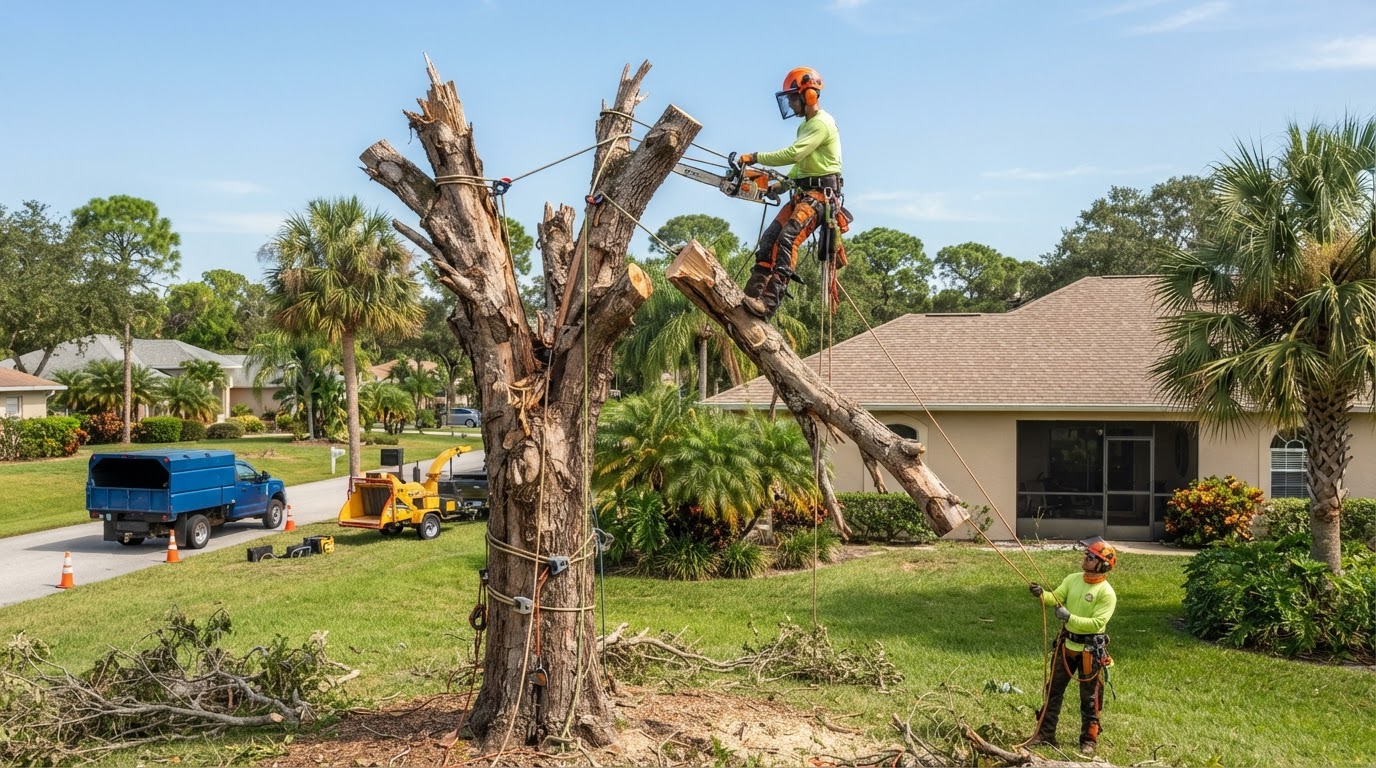
Down South Removal Tree & Land Clearing Riverview removes dead, dying, leaning, and structurally compromised trees for residential and commercial properties across Hillsborough County. A hazardous tree is one that has a significant risk of failure — and when that tree is near a home, a pool cage, a driveway, or a walkway, removing it before it fails is the safe decision.
Dead trees, storm-damaged trees, trees with major trunk cracks, and trees that have developed lean are common hazardous-tree situations. We assess the tree, plan the safest removal method for the property, and take it down in controlled sections so nothing is left to chance.
Conditions to Watch
Conditions That Can Make a Tree a Concern
No single symptom means a tree must be removed, but certain conditions can indicate that a tree has become a risk and warrants closer evaluation.
Extensive Dead Wood
Large sections of dead canopy or dead limbs throughout the tree can indicate systemic decline and create a falling hazard.
Trunk Damage
Large cavities, cracks, missing bark, or fungal growth at the base can signal internal decay that weakens the tree's structure.
Significant Lean
A tree that has developed or increased a lean — especially after a storm — may have root instability that warrants evaluation.
Proximity to Targets
A tree's condition matters most when it sits over a home, roof, pool cage, driveway, or area where people and property are present.
Several observable conditions may indicate that a tree has become a concern. Extensive dead limbs throughout the canopy can mean the tree is in systemic decline. Large cavities or cracks in the trunk may signal internal decay that has weakened the tree's structural wood. A tree that has developed a significant lean — especially if the lean appeared after a storm — may have root instability.
It is important to understand that individual symptoms do not automatically mean a tree must be removed. A tree with a few dead branches may just need pruning. A tree with a small cavity may still be structurally sound. But when multiple symptoms are present, or when a symptom is severe, the tree may warrant closer evaluation. A tree health assessment can help determine whether the tree can be managed or whether removal is the responsible path.
The location of the tree is a major factor. A dead tree in the middle of an open field is a different situation than a dead tree leaning over a bedroom. When a hazardous tree sits over a structure, a pool cage, a driveway, or an area where people walk, the risk of leaving it in place is far greater.
Property Context
Dead & Damaged Trees Around Riverview Properties
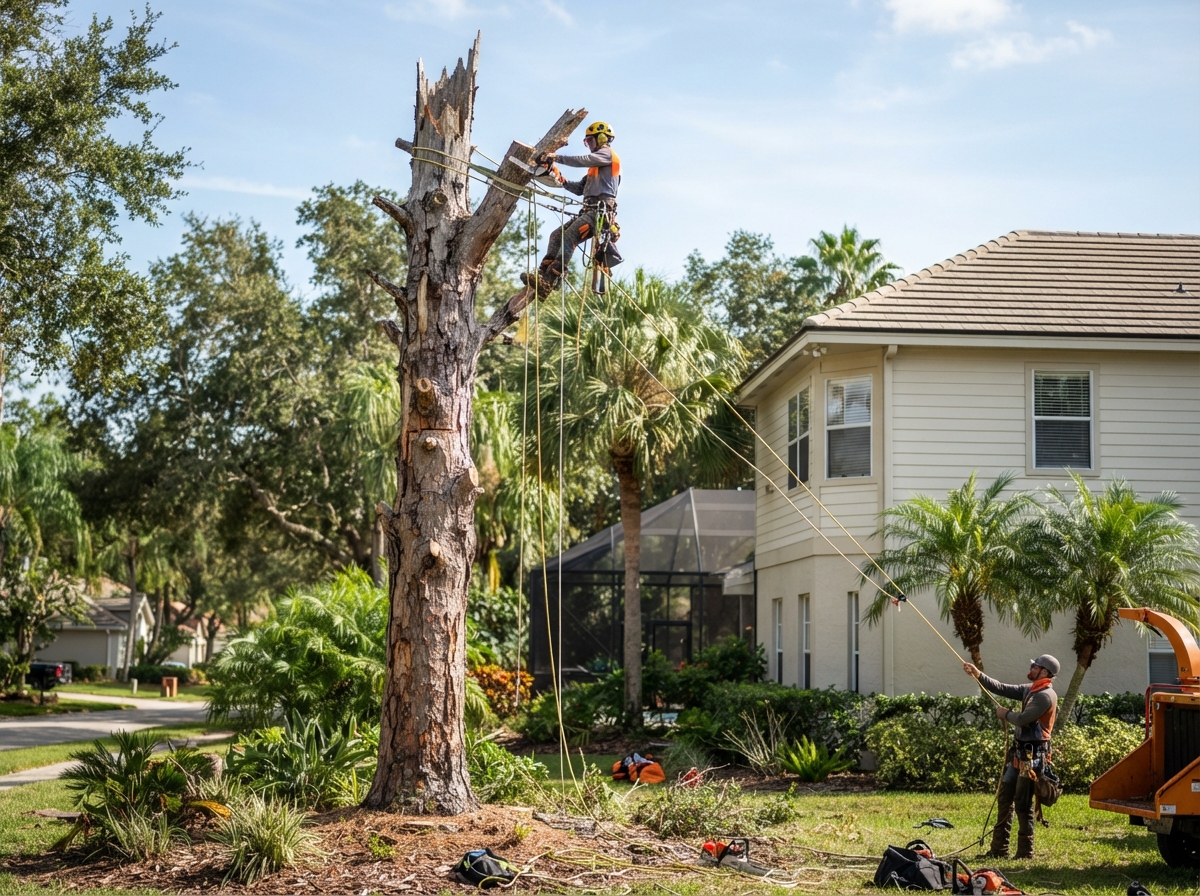
The same tree condition is a very different situation depending on what sits beneath it. A hazardous tree over a roof is urgent; the same tree over open land may be less so.
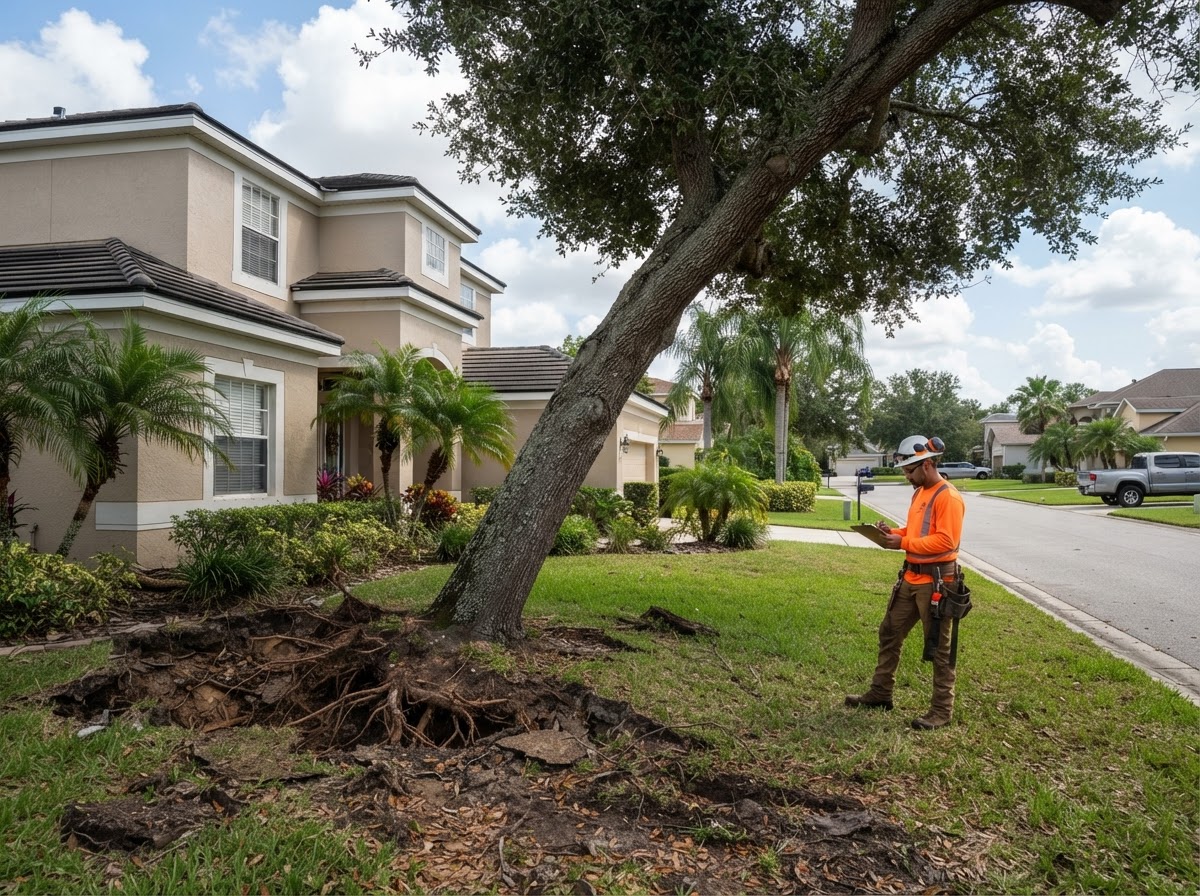
Riverview properties have a mix of mature live oaks, pines, and other species that grow close to homes, driveways, fences, and pool cages. When one of those trees becomes dead or hazardous, its location determines how urgent the situation is. A dead oak over a roof, a leaning pine toward a pool cage, or a split tree beside a driveway all create a real risk of property damage or injury if they fail.
Potential targets include homes, roofs, pool cages, fences, vehicles, driveways, walkways, commercial buildings, parking areas, and neighboring property. The more valuable and occupied the target, the more important it is to address the tree before it fails. We plan the removal around the specific target — rigging the tree apart in sections so that no piece is cut loose above a structure.
Related: tree health assessment, emergency tree removal, and tree cabling & bracing for trees that may be supportable rather than removable.
Complex Removals
Removing Complex or High-Risk Trees
A hazardous tree in a tight spot requires more planning, not less. We dismantle high-risk trees in controlled sections so that every piece is guided to a safe drop zone.
Hazardous tree removal is often more complex than a standard removal because the tree is compromised. A dead tree may have brittle wood that breaks unpredictably. A storm-damaged tree may have hanging limbs or a split trunk that changes how it comes apart. A leaning tree may be under tension that releases unexpectedly when cut. Each of these situations requires a different approach.
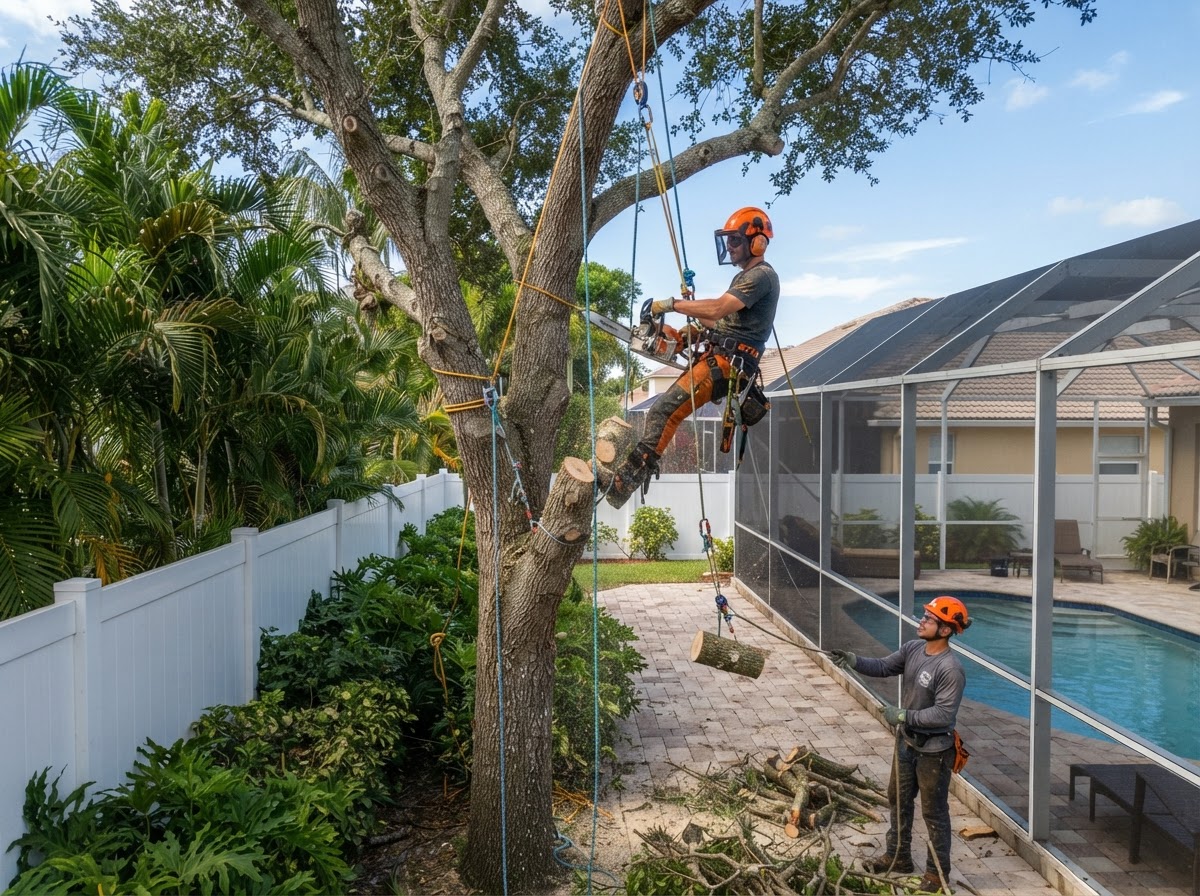
In tight backyards, limited drop zones, and locations near structures, we use controlled sectional removal — taking the tree apart in small pieces from the top down, with each piece rigged and lowered to a controlled drop zone. This keeps heavy wood away from roofs, fences, pool cages, and landscaping. The process is slower than felling a tree whole, but it is the safe way to remove a hazardous tree in a developed setting.
Debris management is part of the project. A large hazardous tree produces significant limb and trunk volume, and we chip, haul, or stage the debris so the property is left clean. Stump grinding can be included if the area will be replanted or regraded.
See also: tight-access backyard tree removal, tree removal over pool cages, tree removal services, and stump grinding.
FAQs
Dead & Hazardous Tree FAQs in Riverview
Direct answers about identifying hazardous trees, removal near structures, and what to do about power-line situations.
Request Hazardous Tree Service in Riverview
If a tree on your property is dead, damaged, or leaning, do not wait for it to fail. Down South Removal Tree & Land Clearing Riverview handles hazardous tree removal across Hillsborough County — from single dead trees to complex removals near structures.