Tree Cabling & Bracing in Riverview, FL
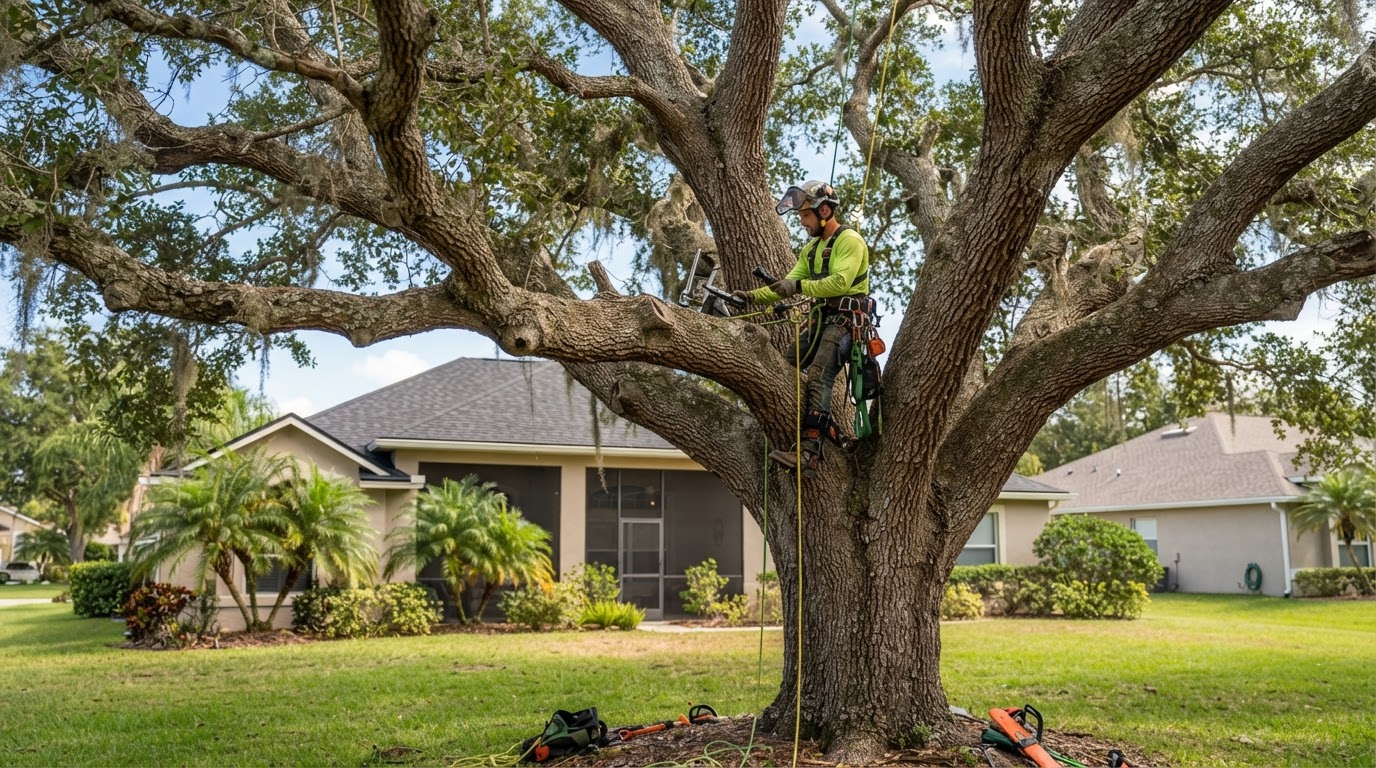
Down South Removal Tree & Land Clearing Riverview installs supplemental structural support systems for trees with specific structural concerns. When a tree has a weak union, a heavy limb, or a multi-stem configuration but is otherwise worth preserving, cabling and bracing may be considered as an alternative to removal.
Cabling and bracing do not repair a tree or make an unsafe tree safe. They are targeted support measures that limit how far a limb or union can move under load. The right approach depends on the tree's condition, the specific weakness, and what sits beneath it.
What It Addresses
What Tree Cabling & Bracing Is Used For
Cabling and bracing are supplemental support systems. They reduce the risk of specific structural failures — they do not fix decay, root problems, or a tree that is already failing.
Weak Unions
Co-dominant stems and tight branch attachments can develop weak unions that split under load. Cabling limits how far those unions can spread.
Heavy Limbs
Large, overextended limbs — common on mature live oaks — carry significant weight. Support can reduce the chance of a heavy limb failing.
Multi-Stem Trees
Trees with multiple leading trunks are more prone to splitting. Bracing and cabling can hold the stems together as a supplemental measure.
Minor Splits
A limb or union that has begun to crack may be candidates for bracing if the damage is limited and the rest of the tree is sound.
Cabling and bracing are considered when a tree has a structural concern that can be addressed with support rather than removal. A mature live oak in a Riverview backyard may have a wide-spreading canopy with a heavy limb reaching over a roof. If the limb's attachment point is weak but the limb itself is sound, a cable high in the canopy can limit how far the limb can drop under wind load.
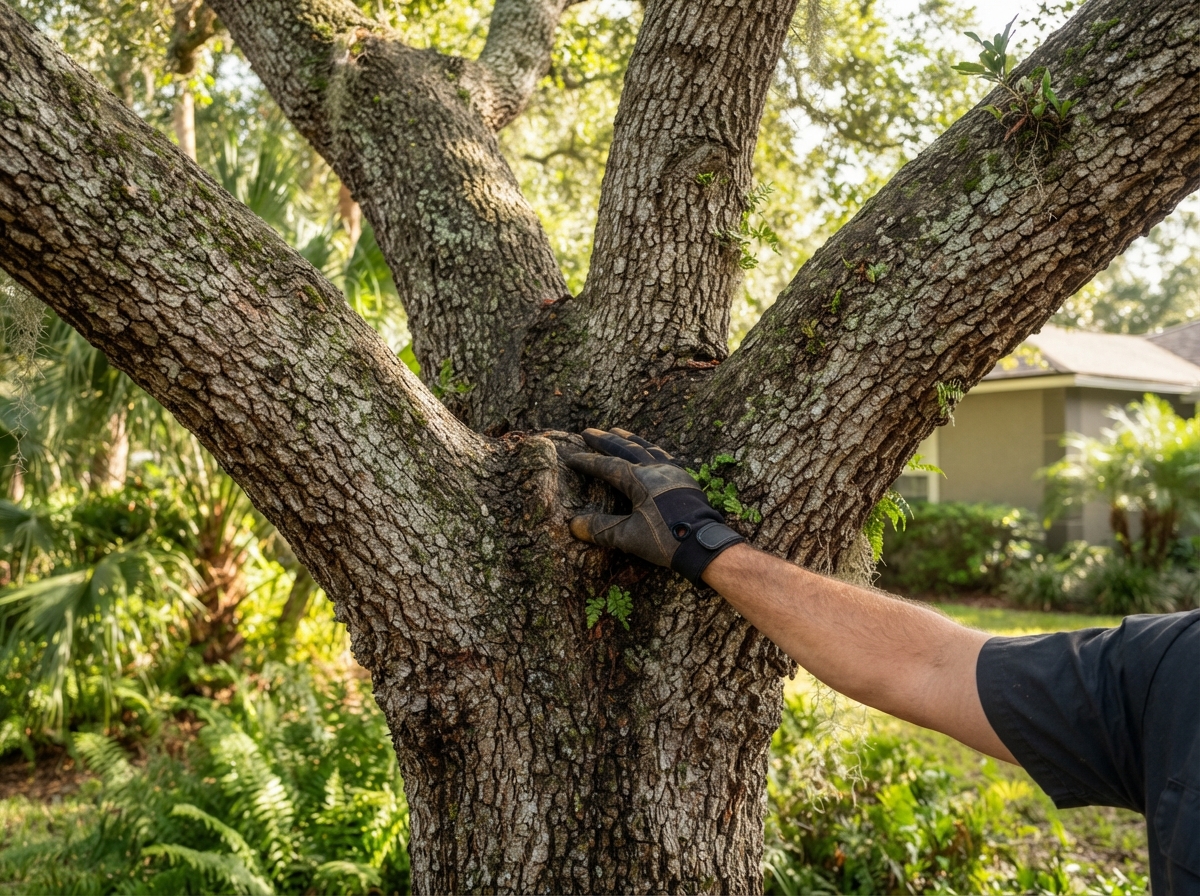
Multi-stem trees — those with two or more leading trunks — are common candidates. The union where the stems meet can be a structural weakness, and over time wind and weight can begin to split that union apart. Bracing rods installed through the union can hold the stems together mechanically, while cables above restrain movement.
It is important to understand what cabling and bracing do not do. They do not stop decay, they do not restore a failed root system, and they do not make a hazardous tree safe. If a tree has extensive internal rot, major dead wood, or a compromised root plate, support systems are not the answer — removal is. Tree condition and site circumstances determine whether support is appropriate at all.
Property Context
Tree Support Systems for Riverview Properties
Where a tree sits on the property matters. A structurally questionable limb over an empty field is a different situation than the same limb over a roof, a pool cage, or a parking area.
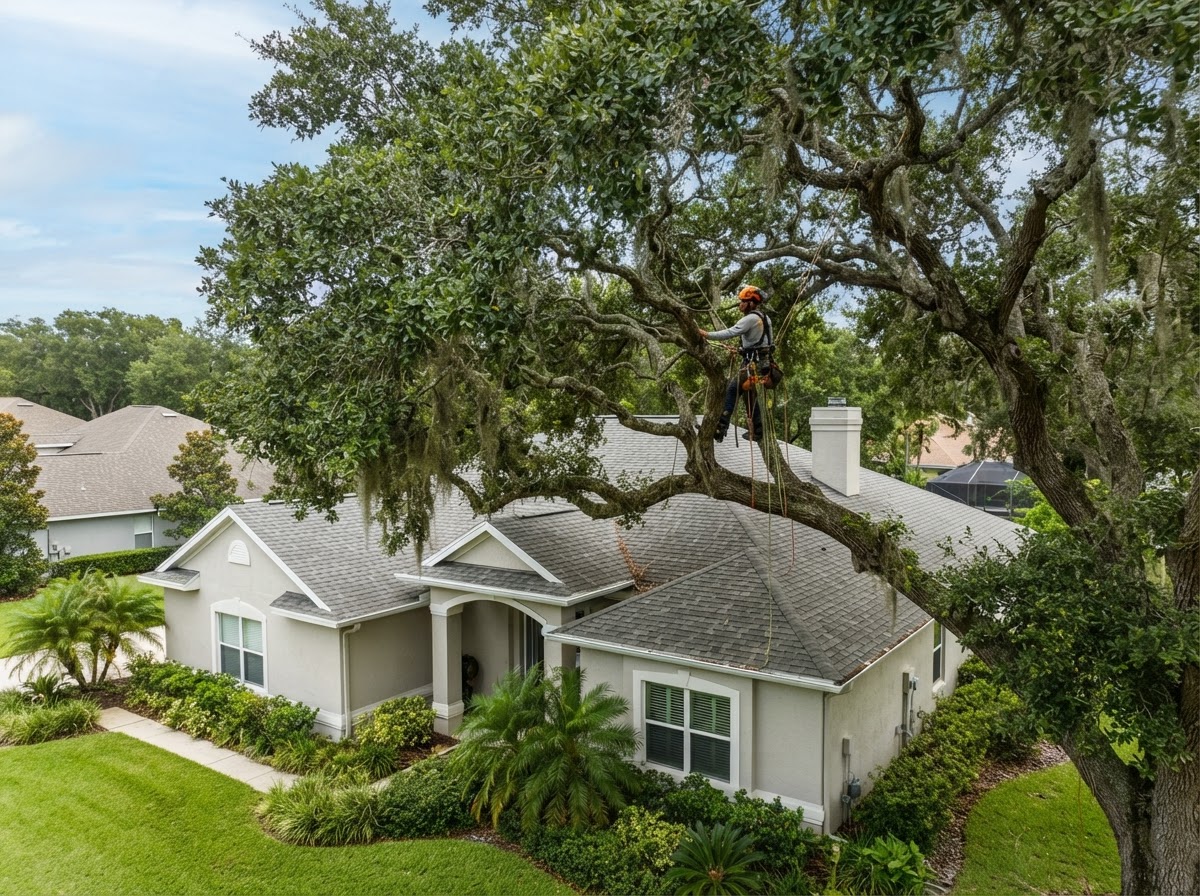
Large Florida trees interact with developed property in ways that change the calculation. A mature live oak can have limbs 30 or 40 feet long carrying significant weight. When that limb extends over a home, a pool cage, a driveway, or a walkway, the consequence of a failure is far greater than if the same limb hung over open lawn.
Location also affects how support is installed. Cabling requires access high in the canopy, which may involve climbing or a bucket truck. Trees tight against a structure or in a fenced backyard can still be cabled, but the installation is more involved. We plan the support installation around the property the same way we plan a removal — accounting for access, structures, and what is underneath.
Related: tree health assessment and tree trimming are often combined with cabling to reduce load before support is installed.
The Decision
Cabling, Bracing, Pruning, or Removal?
Structural support is one option among several. The right choice depends on what is wrong with the tree and how much risk the surrounding property can tolerate.
When a tree has a structural concern, the next step is not automatically cabling or removal. Several options may apply, and the right one depends on the nature of the problem. Selective pruning can reduce the weight and wind-sail of a heavy limb, sometimes enough that cabling becomes unnecessary. A tree health assessment can identify whether the concern is structural, biological, or both.
Cabling and bracing make sense when a specific, identifiable weakness can be supported and the rest of the tree is sound. They do not make sense when the tree is in broad decline, has root failure, or has decay that has hollowed major structural wood. In those cases, removal is the responsible path — no support system compensates for a tree that is failing at the roots.
See also: tree health assessment, tree trimming & pruning, dead & hazardous tree removal, and tree removal services.
FAQs
Tree Cabling & Bracing FAQs in Riverview
Direct answers about what cabling and bracing do, when they help, and when removal is the better choice.
Discuss Tree Support Options in Riverview
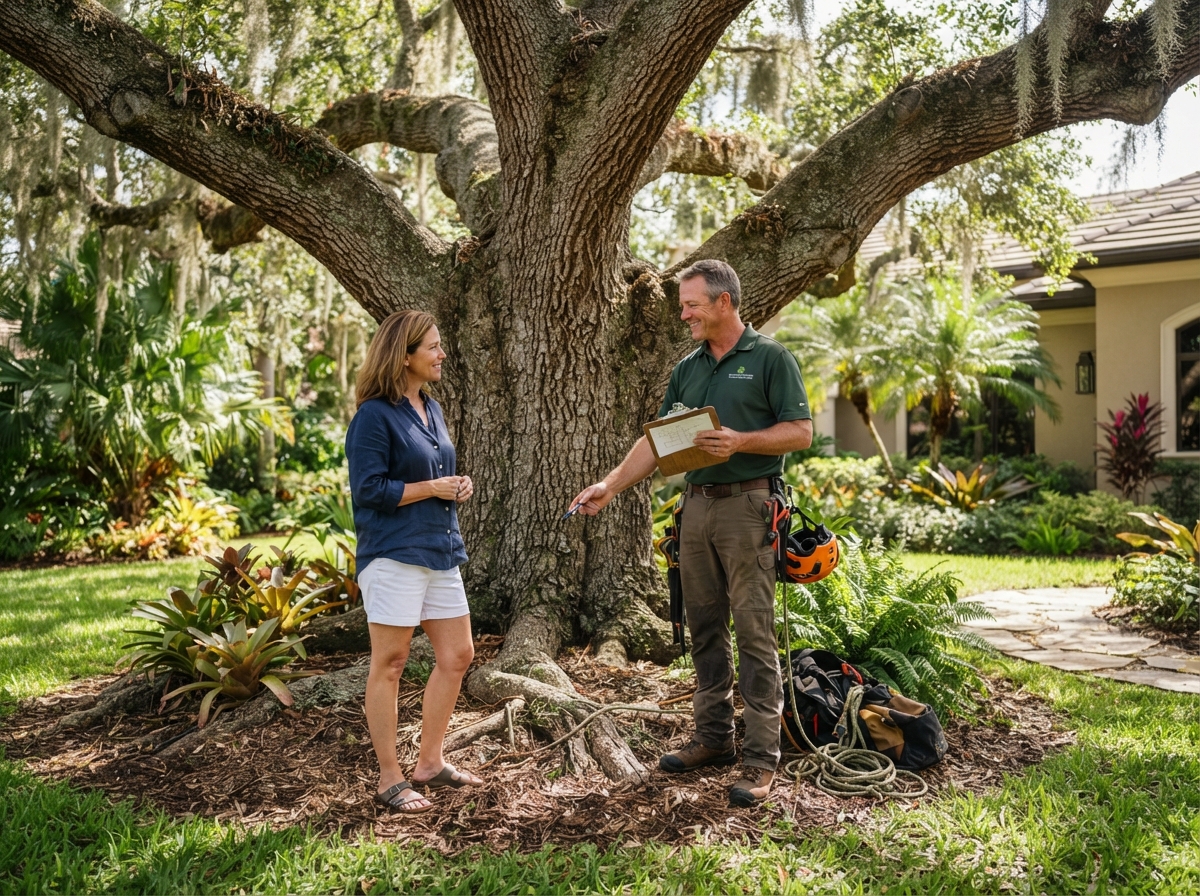
If a tree on your property has a structural concern, we can help you understand whether cabling, bracing, pruning, or removal is the right path. Down South Removal Tree & Land Clearing Riverview handles tree support projects across Hillsborough County.