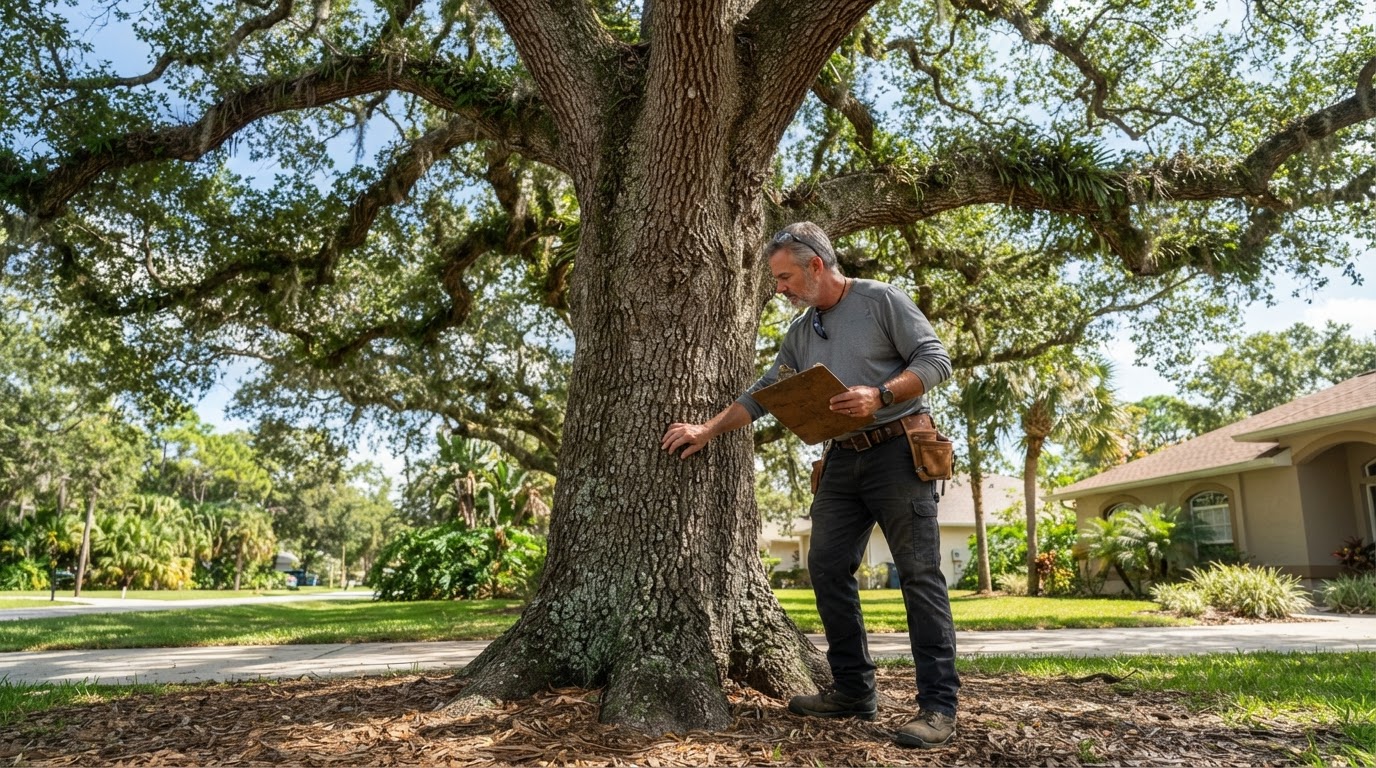
Residential & Commercial Arborist Services in Riverview, FL
Down South Removal Tree & Land Clearing Riverview provides arborist services for residential and commercial property owners across Hillsborough County. We evaluate tree condition, identify structural concerns, and help property owners make practical decisions about pruning, removal, and ongoing tree management.
Arborist services bridge the gap between noticing a tree concern and knowing what to do about it. Whether a tree is showing decline, has storm damage, or is near planned construction, an assessment helps clarify whether the tree needs work and what kind.
When to Assess
When a Tree Assessment May Be Useful
A tree assessment is valuable whenever you have a question about a tree's condition, safety, or future — and you want information before deciding what to do.
Visible Decline
Thinning canopy, dieback, or changes in foliage that may indicate a tree is struggling.
Dead Branches
Dead or broken limbs in the canopy that may need removal or signal broader issues.
Construction Planning
Trees near planned construction that may be affected by or affect the project.
Pruning vs. Removal
Uncertainty about whether a tree needs trimming, removal, or no action at all.
Several circumstances can warrant a closer look at a tree. Visible decline — a thinning canopy, dieback in the upper branches, or leaves that look off — may indicate that a tree is struggling. Dead branches in the canopy can be a sign of structural issues or natural shedding, and an assessment helps tell the difference.
Trunk damage is another common reason. Cavities, bark loss, cracks, or fungal growth on the trunk can indicate internal issues that are not visible from the surface. A tree that has developed a lean — especially a new lean after a storm — may indicate root instability. Root-zone disturbance from construction, grade changes, or trenching can affect a tree's stability even when the canopy looks fine.
We use language like "may indicate" and "can warrant closer evaluation" deliberately. Individual symptoms do not automatically mean a tree must be removed, and we do not diagnose disease from generic descriptions. An assessment looks at the whole tree in its specific context before making a recommendation.
Who We Serve
Tree Services for Homeowners, Businesses & Managed Properties
Tree condition affects decisions about trimming, removal, cabling, root management, construction, and replacement — and those decisions look different for a homeowner, an HOA, and a developer.
For residential property owners, an arborist assessment often answers a specific question: is this tree safe, does it need trimming, or does it need to come down? A tree with dead limbs over a roof, a tree leaning after a storm, or a tree near planned construction all benefit from evaluation before action is taken.
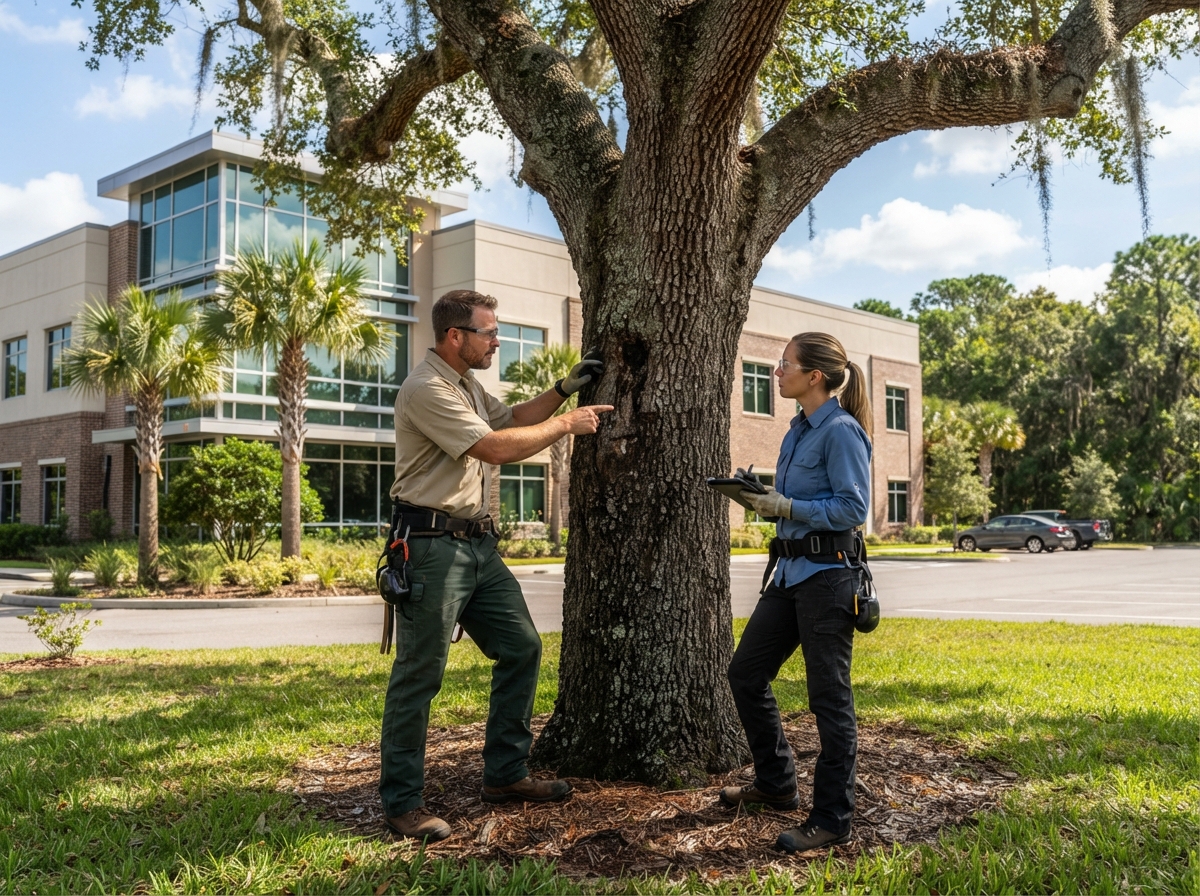
For commercial properties and HOAs, tree assessment supports broader management decisions. Which trees in a common area need attention? Which trees are hazards to parking or walkways? Which trees can be preserved during a site improvement project? Property managers use assessments to prioritize work and plan maintenance budgets.
For developers and investors, tree condition affects construction planning. Trees near a building footprint may need removal, while trees at the perimeter may be preservable with protection measures. An assessment before construction starts helps identify which is which.
Related: tree health assessment & inspection, tree cabling & bracing, certified arborist reports & tree risk assessments, and tree mitigation & replacement planting.
Next Steps
From Tree Condition to a Practical Service Decision
An assessment is only useful if it leads to a clear next step. Not every tree concern requires removal — and a balanced assessment considers the full range of options.
After a tree is evaluated, the recommendation may be any of several paths. If the tree is stable and the concern is minor, continued observation may be the right call — not every tree needs work right now. Targeted pruning can address dead wood, clearance, or structural issues without removing the tree.
For structurally weak but valuable trees, cabling and bracing can reinforce the tree and reduce the risk of failure. If a tree is dead, hazardous, or cannot be maintained safely at its location, removal is the practical decision. Root-related work — root pruning or barrier installation — may be appropriate when root-zone issues are affecting the tree or nearby structures.
The point is that an assessment should not default to removal. It should give you the information to make a balanced decision — one that considers the tree's condition, its value to the property, and the risk it does or does not pose.
Continued Observation
If the tree is stable and the concern is minor, monitoring over time may be appropriate.
Targeted Pruning
Removing specific branches to address dead wood, clearance, or structure.
Cabling & Bracing
Reinforcing structurally weak trees to reduce the risk of failure in valuable specimens.
Tree Removal
When a tree is dead, hazardous, or cannot be maintained safely at its location.
Root-Related Work
Addressing root-zone issues through pruning or barrier installation where appropriate.
Further Evaluation
Additional specialized assessment if circumstances warrant closer inspection.
FAQs
Arborist Service FAQs in Riverview
Direct answers about tree assessments, what they include, and how they inform decisions about pruning, removal, and management.
Request Tree Assessment or Arborist Services in Riverview
Tell us about the tree and your concerns. Down South Removal provides arborist services for residential and commercial properties across Riverview and Hillsborough County.